AdSense

Thursday, June 9, 2016

Japanese at train stations and/or on trains in Tokyo

Japanese at train stations and/or on trains in Tokyo:
1. Rushing into their trains (and sometime s bump into you)
2. Cling to others to fill in the space (I'm sure you feel uncomfortable.)
3. Staring at their smartphones (even while walking)
4. Drunk and noisy (especially late at night, because they always have to be quiet and stay sober during the day and it is stressful to them?)

The Intelligent Investor, Rev. Ed Kindle Edition by Benjamin Graham,Jason Zweig, Warren E. Buffett (Collaborator)

Ben Graham is considered to be a father of value investing and a teacher of Warren Buffett.

"Great investors have objectivity, simplicity, and passion."

"Great companies to invest are like castles surrounded by a moat, which includes brand, low cost operation, near-monopoly status, and impressive services."

"No matter which techniques they use in picking stocks, successful investing professionals have two things in common: First, they are disciplined and consistent, refusing to change their approach even when it is unfashionable. Second, they think a great deal about what they do and how to do it, but they pay very little attention to what the market is doing."

"As Graham liked to say, in the short run the market is a voting machine, but in the long run it is a weighing machine."

"When you buy a stock, you become an owner of the company."

"The first and most obvious of these principles is, "Know what you're doing--know your business.""
"A second business principle: "Do not let anyone else run your own business, unless (1) you can supervise his performance with adequate care and comprehension or (2) you have unusually strong reasons for placing implicit confidence in his integrity and ability.""
"A third business principle: "Do not enter upon an operation--that is, manufacturing or trading in an item--unless a reliable calculation shows that it has a fair chance to yield a reasonable profit. In particular, keep away from ventures in which you have little to gain and much to lose."
A fourth business rule is more positive: "Have the courage of your knowledge and experience. If you have formed a conclusion from the facts and if you know your judgement is sound, act on it--even though others may hesitate or differ."

The Intelligent Investor, Rev. Ed Kindle Edition
by Benjamin Graham, Jason Zweig, Warren E. Buffett (Collaborator)
amazon.com
amazon.co.jp

Wednesday, June 8, 2016

The Black Swan / Nassim Nicholas Taleb

Features of the "black swan":
1. Abnormal (outside of our imagination)

2. Huge impact

3. Two types.
Type I: After it happened, we tend to think it predictable by using reasons that sound like a truth (but actually aren't). Probabilties / impacts of this type are overestimated.
Type II: We cannot include this type into our model, so it tends to be ignored. Probabilties / impacts of this type are underestimated.


We have to distinguish two things:
[A] There is no evidence that a "black swan" exists.
[B] There is an evidence that a "black swan" does not exist.


You can keep betting on a black swan, if you want. However, people tend to prefer small and short-term continuous profits to big ones that might not get realized in the long run.


Consider biases (e.g., survivorship bias - You can't know what underdogs did/thought.) and distortion (e.g., skewness, kurtosis, over- and under-estimation, estimates vs realities).


You must imagine what you cannot see or recall. People do not recognize what they cannot see and something don't promote their emotional interests.


Do right things at a rough estimate and/or hypothesis, don't do wrong things in a precise manner.

The Black Swan: Second Edition: The Impact of the Highly Improbable Fragility" (Incerto) Kindle Edition by Nassim Nicholas Taleb
amazon.com
amazon.co.jp

Tuesday, May 31, 2016

Getting to Yes: Negotiating Agreement Without Giving In by RogerFisher, William L. Ury

Focus on both principles and incentives of each other, not one's position. This is a well-balanced book, in terms of theories and examples.


[amazon.com]
Kindle Version

[amazon.co.jp]
Kindle Version

Monday, May 23, 2016

Zero to One / Peter Thiel

To work on an eternal value-added process, don't do a commodity business; hold a monopolistic influence in a market.

Humans and computers are good at different things; a computer is just a tool to help a human (pursue a higher productivity), not a rival to replace a human.

Seven questions for a successful business:
1. Engineering
Breakthrough, not a gradual change
2. Timing
Appropriate timing to begin with?
3. Monopoly
Start with a small market that you can be dominant.
4. Team
Build a team.
5. Sales & Marketing
Not only product development, but sales & marketing
6. Eternity
A right positioning to survive in the market in the next 10-20 years?
7. Hidden truth
Nobody but you noticed the unique truth?


[Amazon.com]
Kindle Version

[Amazon.co.jp]
Kindle Version

Wednesday, May 11, 2016

The Big Short by Michael Lewis

Markets could go too far without proper regulations. Greed is a precondition of financial markets because it drives the market. Having appropriate incentive systems under the precondition is a practical solution to avoid and/or mitigate impacts from financial crises.

To be a good investor, you have to be realistic and do your own deep research to see facts and doubt about what has been believed.

[Amazon.com]
The Big Short: Inside the Doomsday Machine Kindle Edition by Michael Lewis

[Amazon.co.jp]
The Big Short: Inside the Doomsday Machine Kindle Edition by Michael Lewis

Sunday, May 1, 2016

Creativity is connecting dots.

Creativity is not creating something from scratch; rather, it's connecting dots, which are somebody's findings, knowledge, experience, works, and so on.

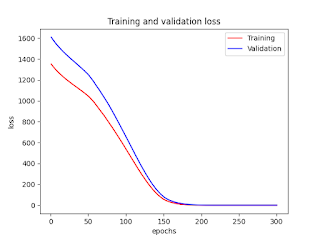
Deep Learning (Regression, Multiple Features/Explanatory Variables, Supervised Learning): Impelementation and Showing Biases and Weights

Deep Learning (Regression, Multiple Features/Explanatory Variables, Supervised Learning): Impelementation and Showing Biases and Weights ...