Source:
http://www.udiscovermusic.com/playlists/begin-a-journey-into-jazz
Friday, June 16, 2017

Sunday, April 30, 2017
Essential problem
If you want to figure out what an essential problem is, you have to be objective and see things from a higher perspective. Going deeper and focusing on details do not necessarily bring you to the essential problem.
Friday, April 28, 2017
"The best way to predict the future is to invent it." Alan Kay
"The best way to predict the future is to invent it."
Alan Kay
"The best way to bet on the future is to invest in it."
An anonymous investor
Good Sleep
Chapter 2 Routines for a good night sleep
(1) make a light dark 2 hours before sleeping
(2) avoid (especially regular) noises even a fridge or a clock - earplug or snow music in small volume would also be ok
(3) your favorite slow music with regular tempo in small volume
(4) aroma - lavender, camomile, sandalwood, clary sage, sweet orange
(5) your best bed and pillow
(6) timer setting (e.g, air conditioner) - switch off in 1-3 hours after falling asleep
(7) no food and drink 3 hours before sleeping
(8) foods for a good sleep - lettuce, onion, natto (fermented soy beans, Japanese food); have enough breakfast, lunch, and then a light meal for dinner
(9) No smartphone, PC/Mac, TV, 3 hours before sleeping
(10) Take a bath / shower with 40 centigrade; decrease an inside temperature of your body. It if it's too hot (e.g., 42 centigrade), it prevents you from having a good sleep.
(11) Do an exercise; it should be light, not strong.
(12) Perform your personal ritual. It is a self-suggestion to make you sleep.
(13) Recall good things today and prep for tomorrow, to-do and schedule, clothes and things to bring, when to get up.
(14) Sex
(15) Give up something unnecessary to have enough time for sleep. Give up one of many hobbies, drinking, etc.
(16) Rhythm and routine of your life are important; medicine could be of your help, but it is only for temporary.
Chapter 3 How to be an early bird
Waking-up-refreshed techniques:
(1) Reset your internal clock by sunlight
(2) Set a reason to get up, like jogging in the morning
(3) Have a sugar content just after getting up, such as, bananas, cookies, chocolates, or orange juice
(4) Chew gum after getting up
(5) Take a shower or wash your face
(6) Have breakfast, especially carbohydrates(e.g., rice/bread) and protein. After 2 hours of your breakfast, glucose is delivered to your brain.
(7) Caffeine, e.g., green tea (gyokuro) in the best, then black tea, coffee, or other green tea
Chapter 4 Common Sense in Sleep
Sleep too long is not good because only 2-3 hours sleep at the beginning is deep (non-REM). If you sleep longer than necessary, you have more shallow sleep.
Non-REM: brain - rest, body - relaxed and unstable (e.g., blood pressure)
REM: brain - awake, body - tense and steady
Each person has his or her own best sleeping time. Some people sleep longer while others sleep shorter.
Drinking coffee and then having a nap for 15-20 min is good; if it's longer than that, you enter a deep sleep and have trouble getting up.
Dreaming a nightmare means the quality of your sleep gets worse.
Chapter 5 Those who cannot get up in the morning - ten common points
(1) lack of sleep
(2) bad lifestyle habit
(3) biological clock - out of order
(4) too much tenseness
(5) escape from reality
(6) depressive tendency
(7) suffocation
(8) too much sleep
(9) female hormone
(10) sleepy during the day
Chapter 6 How to get up refreshed
See above.
Thursday, April 27, 2017
AI
Chapter 1 Why AI now?
Three types of AI:
(1) rule-based
(2) probability/statistics-based in Bayesian network
(3) deep learning in neural network
Current web search by Google is based on the page rank algorithm, which highly valuate a website with many links from others; many links mean that the web site is more trustworthy.
The next phases of web search are:
(1) semantic search by Google, which understands what people really want, not just search based only on a keyword used
(2) Siri, an intelligent personal assistant and knowledge navigator, by Apple
(3) graph search by FaceBook - e.g., "What is my friend's favorite song?"
Each player tries to provide necessary info after listening to what a user says; i.e., each company wants to dominate a gateway to the mobile internet.
Big data consists of:
(1) structured data (e.g., customer name, sales figures)
(2) unstructured data (irregular data like inquiries to a call center)
Chapter 2 What is intelligence?
Artificial Intelligence (AI): technology that substitutes humans' intelligent activities with machines such as computers and softwares on it
Chapter 3 Value of Intelligence
Requirements for a project:
(1) What is it for? The more a goal is concrete, the higher the probability of success is.
(2) Feasibility. Is technology developed enough to make it happen? How about human resources?
(3) Is it meaningful for a society?
(4) Why now? Is it timely?
(5) Evolvability / expansibility. What kind of technology is derived from it?
(6) Publicity. Is it interesting for a society?
(7) Motivation. Does a project motivate people?
Chapter 4 Issues of AI
(1) Risks of when people are too dependent on machines / systems.
(2) Concerns for people's employment and existence value replaced by AI.
(1) Risks of when people are too dependent on machines / systems.
Automated driving
Flash crash in stock markets
(2) Concerns for people's employment and existence value replaced by AI.
AI for chess,etc.
(1) game tree exploration (forecasting)
(2) current status / condition analysis by evaluation function
Also, AI does not get tired, feel a fear or sleepy, and lose concentration.
Friday, April 21, 2017
Originals by Adam Grant
In this book, originality is (1) opposite of conformity, homogeneity, and (2) the combination of creativity and implementation, i.e., realizing an idea that is acceptable for others.
Competitive strategy in one sentence is "doing good things for clients/customers while being different from peers in the long term." It all boils down to building barriers to imitation. Furthermore, to avoid imitations, having irrational parts that would make the whole structure rational.
Competitive strategy in one sentence is "doing good things for clients/customers while being different from peers in the long term." It all boils down to building barriers to imitation. Furthermore, to avoid imitations, having irrational parts that would make the whole structure rational.
Part 1 Creative Disruption
Do not use what we have as it is; look for better alternatives by yourself.
Justifying and maintaining a current system makes people feel relieved; if the world is what it should be, then you do not need to feel distracted by it.
However, if you reluctantly just follow something, you're losing an appropriate anger for injustice and positive attitude and willpower to make the world better.
If you're curious about an existing system that you don't agree with, you'll notice that the majority of them is due to social reasons; rules and systems are built by people. Therefore, they can be changed by people. If you realize it, then you can be brave enough to think and act to change the world.
If you have too strong will to achieve a good result, originality and/or creativity could not be the first priority. If being successful is important, then you worry about a failure. You only make an effort to achieve something that seem to be achievable.
It is likely that a company founded by people who are risk-averse and concerned about the possibility of idea to be realized could survive.
A company by a reckless gambler is more vulnerable.
When people take a risk in a certain field, people tend to behave carefully in other fields to mitigate the high risk and have optimized overall risk.
Moreover, if you are safe in a certain field, you have freedom to pursue your originality in another field.
According to some research results, entrepreneurs are not necessarily risk-seeking; actually, they are risk-averse.
Your limit is set by yourself.
People regret what they did not do rather than failing.
Part 2 Think boldly, work out finely
The biggest hurdle for original ideas is not coming up with them, but selecting them; a creator him/herself cannot evaluate their ideas appropriately.
What should we do? Come up with as many ideas as possible. According to a research, a genius creator in a certain field is not necessarily better than others in the same field, from the quality of creations. However, the more you create, the more diversified your creations will be, and it is likely to create your original works.
If you want someone to evaluate your original ideas, one of the best persons to ask is a peer in your field, not your boss / management.
If you have a variety of experience in various fields and an interest in art like dance, novels, paring, playing music, then you tend not to doubt about new and odd ideas.
When can you trust your intuition? If you (1) lack of experience, (2) are overconfident, and (3) are too passionate, it is NOT right time to believe your six-sense.
Your tuition is likely to be right in a field where you have plenty of experience, thanks to unconscious pattern recognition. On the contrary, when you lack of knowledge / experience, you should take time to analyze before making a decision.
Your invented product and/or service have/has to be not only new, but also practical.
You can rely on your intuition in a field where you have a lot of experience to make decisions for something that can be forecastable.
Things change quickly nowadays and our future is more unpredictable than before. We cannot rely on intuition and experience to support when we try new things; therefore, analyses are more important.
If you were successful in a certain field in the past, you could be struggling in a new field; overconfidence makes you reluctant to listen to others.
If you want to choose a great idea, you should not see whether or not people with an idea succeeded, rather, "how" people became successful is important.
Part 3 Change Indifference to Passion - how to get people around you involved
The great has always been facing opposing views.
When someone is trying hard to make things better but people around him/her don't respect him/her, this person could be caught in a vicious circle of a grudge. This person tries to show how important he/she is, and behave in a pompous manner.
Specificity Credit:
If someone behaves in a way that people don't expect, this person could be regarded as one with higher ability and status; since he or she is special, he/she can behave abnormally.
If you admit your (company's) weakness, then you have four merits:
1. Audience let their guard down. People try not to be sold.
2. Pessimists look smart and excellent in insight.
3. You look trustworthy.
4. People think something important when they can recall it easily; if you show negative things to your audience first, the audience find coming up with more negative things hard. Moreover, if the audience quickly figure out positive factors, that would be even better.
Mere Exposure Effect:
The more you have an exposure to something / someone, the better you like it / the person. This is applicable when you tell your new idea to others; repeatedly tell them.
When you are not satisfied with a current status, there are four ways to deal with it.
x-axis: benefit or damage to an organization
y-axis: change or do not change the current status
Action (x, y)
1. Separation / Withdrawal (damage, change)
2. Say your opinion (benefit, change)
3. Persistence (benefit, do not change)
4. Ignorance (damage, do not change)
A way you choose depends on (1) your controllability of the situation and (2) your commitment to the situation. That is, whether or not you believe you can change and you have a strong interest to change the situation.
If (1) you cannot change and (2) you do not have a commitment(interest), then your choice would be 4. Ignorance.
If (1) you cannot change but (2) you have a commitment, then your choice would be 3. Persistence.
If (1) you can change but (2) you do not have a commitment, then your choice would be 1. Separation.
If (1) you can change and (2) you have a commitment, then your choice would be 2. Say your opinion.
If someone is in the middle class, he/she tends to go along with others; they are in an unstable status and do not want to risk their position. They want climb up, but they also worried about losing and falling off.
Someone in the lower class do not have many things to lose; rather, they gain a lot if they stick to their original ideas.
Someone in the upper class is regarded as a different person and is expected to behave differently.
When you try to change something, then it is efficient to talk to the upper and lower class and avoids talking with the middle class. (An exception could be a politician under democratic systems).
What we can do is say your opinion while keeping your risk portfolio (status) safe and prepare for a possibility to leave your current working place.
In the long run, people regret a failure because of what they didn't do, not what they did.
Part 4 The wise wait for the right time and the fool rushes.
Procrastination (delaying something) might be bad from a productivity point of view, but might be a source of a creativity if you have a passion to generate a new idea and keep trying more possibilities and improving.
Being original has to be different from, and better than, others.
Moving first does not necessarily mean you have a high probability to be successful. If a market is unstable, uncertain, or pioneered, than the first could be disadvantaged. If you have an original idea, then it is not always right to rush and get to a goal faster than others. (Exceptions could be something related to patents or network effect like telephone and social networking services.)
There are two types of innovations.
- Conceptual innovation (backed by a great and brand-new idea, not affected by experience, done by a sprinter)
- Experimental innovation (backed by trial and error, and experience, done by a marathon runner)
Part 5 Who You Work with Determines Winning or Losing
When working with a group of people who have a similar sense of value, it is important to have a common way of doing things to sympathize.
The originals have to be a moderate extremist to be successful. They have untraditional ideas but persuade people in a mainstream. Focusing on how, not why, could mitigate the degree of the extremeness.
(positive effect, negative effect)
(Low, Low) acquaintance who has almost no interest
(High, Low) friends who are always supportive
(Low, High) enemies who always try to interrupt
(High, High) "frienemies" who both support and interrupt
The best approach is to change your enemies to your supporters. The best supporters are someone who were against you, but are now for you.
You tend to appreciate someone who are gradually supportive more than others who are always supportive. If you start to like those who were against you, they also begin to like you. They try to avoid cognitive errors by making an effort to keep liking you.
Most importantly, the previously-anti-you people are the best persons to understand and persuade currently-anti-you people.
One of the most promising ideas is something you begin with an odd, untraditional things, but then add familiar, traditional things to make it persuasive, familiar, and popular.
It is very hard to change others' value; it is much easier to find common factors of your and their values, and connect them.
Part 6 The misfit, who is out of line, goes ahead of the times.
Many of the original are risk takers because people around them respect their independence and protect them.
When parenting, if parents explain children that they believe their children can understand, grow, and improve, children tend to consider their behaviors and effects on others by that. Those parents also tell their children that children should make their own rules by themselves. On the contrary, some parents force children to follow their (parents') rules.
When thinking about yourself, a logic of results works. When thinking about others, a logic of validity works; a man/woman like me should do what under this circumstance?
If you appreciate someone's personality, not deed itself, he or she tends to take it as a part of his or her identity. He or she doesn't think that he/she just behaves appropriately; he or she thinks that he/she is a good person.
Part 7 Organizations get ruined, organizations get elevated
When an industry moves dynamically, a large company with a strong corporate culture in the industry gets isolated. It neither learns nor adapts, so it underperforms compared to peers and gets unstable.
If you want to build a strong culture as Bridgewater Associates by Ray Dalio does, not cult, one of the core values is "diversity". Welcoming differences in opinions is differentiating a strong culture and a mere cult. A quality of an idea matters, not a seniority, a length of career or title at a company. At Bridgewater, only the best idea is employed.
Those who cannot disagree with others in a constructive manner bring the worst tragedies to humans.
Bosses usually want their subordinates to bring solutions, not problems. However, if a company culture focuses too much on solutions, it is biased to a culture of defense and discourages the spirit of exploration. If someone is always required to show a solution, he/she has to come to a conclusion in advance, and he/she misses a chance to view and learn from a wider perspective.
If each of members in a group has different information, a leader has to clarify what the true problem is, before finding a solution and trying to defend it.
A leader is expected to find a person who disagrees with him or her in order to properly raise an issue.
Ray Dalio wants his team to bring up an issue, not necessarily a solution.
Deciding on a democratic manner, one person one vote, is foolish. Credibility of each person is not the same, says Ray Dalio.
Discuss as if you're right, listen to others as if you're wrong.
Ray Dalio thinks that the most important thing is "think by yourself."
A more powerful way than discussions for resolution of differences of opinions is science, including experiment and data collection, rather than your own logic, experience, intuition, or conversation.
An influential person has the following features:
(1) strong passion
(2) imagination
(3) intense curiosity
(4) non-conformity
(5) being rebellious
Again, "think by yourself."
Part 8 Make anything your source of energy
There are two strategies to deal with difficulties:
(A) strategic optimism
(B) defensive pessimism
If you have a strong will and a fear, then (B) is the right choice.
To overcome a fear, getting excited is better than calming down. It is easier to replace the fear with other feeling, like excitement, than to try to control the strong feeling of the fear.
On the contrary, if you do not have an enough will to take an action, it is risky to be pessimistic.
If you are ready to take an action, you should face the fears with defensive pessimism. Your "GO" system works, not "STOP" system.
To realize you are not alone, you don't necessarily have many supporters; actually, only one supporter could be enough.
Humors work when people fear - not braking by "STOP" sytems, but accelerating by "GO" systems. It's a great way for people without a power to change strong negatigve feelings to the positive ones.
Daniel Kahneman's behavial finance theory:
For a certain profit, people tend to be risk-averse; for a certain loss, people incline to be risk-seeking.
If you get angry with others, that would nurse your wrath; if you get angry "for" others, it would be an incentive to establish justice and build a better system. You don't want to punish others; you want to help people.
Being original is not an easy way to be happy; however, happiness by pursuing is not replaceable.
Amazon.com
Amazon.co.jp
Monday, April 17, 2017
Political Scholars Dillemma
Some political scholars say "I don't understand why the public supports the current administration that I think terrible."
There are some possibilities:
(A) The administration is actually terrible, and the political scholars' ideology is actually great or at least better.
The problem is that no one takes care of the political scholars. In that case, they should design and build a system to tell their ideology and doable policies to people.
(B) The administration is actually terrible, but the political scholars' ideology is much worse.
It is hard for the scholars to admit they are idiots.
(C) The administration is actually great, and the political scholars' ideology is much better.
It is natural for people to maintain the status quo. Also, the scholars have to prove that they are trustworthy.
(D) The administration is actually great, and the political scholars' ideology is worse.
Saying "both the administration and the public are fool" might make the scholars feel relieved; after all, the scholars have an incentive to believe that the administration and the public don't know what the scholars know.
Subscribe to:
Posts (Atom)
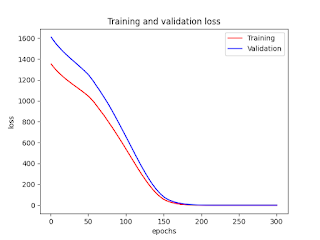
Deep Learning (Regression, Multiple Features/Explanatory Variables, Supervised Learning): Impelementation and Showing Biases and Weights
Deep Learning (Regression, Multiple Features/Explanatory Variables, Supervised Learning): Impelementation and Showing Biases and Weights ...