Saturday, March 4, 2017
A clock isn't just ticking down; it tells you that you are decreasing your life.
A clock isn't just ticking down; it tells you that you are decreasing your life.

Currency Markets
See a cross currency market like USD/JPY, EUR/JPY, and EUR/USD, so that you can evaluate which is cheaper and which is more expensive.
e.g., EUR > USD > JPY (depreciation)
Question:
Why does JPY move in a large scale?
Answer:
(1) Japan's short- and long-term interest rates are one of the lowest in the world.
(2) Japan has one of the biggest financial / capital markets, there are lots of investors / business entities, and it is relatively easy to borrow money.
(3) Japan is one of the biggest current-account surplus countries with a floating foreign exchange rate. (China is no.1 in the current-account surplus, but it is not a floating rate. Also, technically trade surplus of Japan is important rather than income balance surplus, which could be re-invested in the same country.) General business entities sell foreign currencies and buy JPY on a regular basis apart from financial institutions. This creates a constant buy-JPY pressure; when financial institutions also buy JPY (or hedge) to decrease their position, then JPY appreciates more than usual.
Furthermore, Japan is the biggest net lender (creditor) country; it has a huge foreign currency exposure.
On the contrary, the U.S. is the biggest net borrower (debtor) country with the biggest current-account deficits in the world.
Given the reasons above, JPY and USD sometimes move differently. (1) When economic slowdown, stock markets declines, and people are risk-averse ("risk-off"), USD is bought back together with JPY. JPY has a constant buy-pressure by current-account surplus, so it would appreciate more than USD. (2) When "risk-on", JPY needs to have larger foreign investments in order to deprecate against USD.
Question:
What makes a currency get appreciated or depreciated?
Answer:
In the short run, the higher (lower) interest rate, the more appreciated (depreciated).
In the mid run, a "one-way" direction of international money flow with (1) trade, (2) securities investment, and (3) direct investment without "hedging" are important.
In the long run, the higher (lower) inflation rate, the more depreciated (appreciated). The Purchase Price Parity (PPP) works for a long time, 10-15 years; in the short / mid term, currency markets move above or below a PPP-indicated FX rate. A currency in a inflationary (=price increasing) country depreciates while a currency in a deflationary (=price decreasing) country appreciates. Price increasing (decreasing) means currency depreciation (appreciation).
We have to look at a nominal and real "effective" foreign exchange rate. That is weighted by using the money amount of trade (import/export). If you look at JPY, it is an exchange rate vs other 60+ countries' currencies, including 15+ Euro countries.
If you look at nominal foreign exchange rate, it moves along with inflation rate differential. For real rate, it moves above and below the long-term equilibrium rate.
Currency Market Size (April 2010, per day, trillion USD)
Spot = 1.5
Forward = 0.5
FX swap = 1.8
Option and others = 0.3
Total = 4.0
Market share of the total figure above (4 trillion USD)
EUR/USD = 28%
USD/JPY = 14%
GBP/USD = 9%
...
EUR/JPY = 3%
Market share of spot trading (total = 200%)
USD 79.7%
EUR 46.4%
JPY 20.1%
GBP 14.3%
AUD 7.5%
CHF 6.2%
CAD 5.2%
NZD 1.5%
SEK 1.3%
NOK 0.8%
Source: BIS
Japan: current account surplus, creditor
US: current account deficit, debtor
Japan and US are totally opposite in the two aspects above. However, both countries are capital providers and JPY and USD are currencies to borrow to invest. When risk-off (e.g., global economic slowdown, stock price decline, or catastrophe), both JPY and USD are bought back, but JPY usually appreciates against USD because Japan and US are current account surplus and deficit, and creditor and debtor, respectively.
Players in currency markets are financial and general business (e.g., automaker); general business players usually buy or sell currencies without a speculative view. That could create a constant one-direction demand and supply. Financial, speculative players usually build a position so that they can make a profit after an important announcement like the US labor market figures. After the announcement, they close (buy back or sell) their positions and it creates a demand and supply in a currency market. It is very important to understand that speculative players positions are built BEFORE an announcement and it is closed AFTER the announcement.
In that sense, if many people believe that USD should appreciate, they usually build their buy-USD positions, so USD could DEPRECIATE by sell-USD trades in the future.
Question:
An intervention by a central bank seems not to work. Why is that?
Answer:
There are too many trades on the opposite side of the central bank due to (1) apparent central bank's trade, forecastable movement, and more attention, (2) low volatility and easiness to expand position, and (3) a central bank as a liquidity provider (supply), other players as liquidity taker (demands).
Markets reflect economic reality like a mirror in the long term; especially currency markets of developed countries are too huge to manipulate it. Nobody can distort it, even central banks. No one can blame on currency movements (e.g., JPY appreciation from Japanese perspective). The problem is economic fundamentals, like deflation of Japan, not markets themselves.
For Japanese (exporting and importing) companies as a whole, USD depreciation & JPY appreciation is not that negative, but JPY depreciation against non-USD, especially Asian currencies like KRW is very important to make a profit. If you look at JPY/KRW rate and Nikkei 225 in and after 2006, you can make sure of it. This is because Japan as a whole is a current account (technically trade balance) surplus country.
Currency markets do not reflect relative "strength" of a country; it is just a conversion rate of two currencies.
Also, a currency's value is on the opposite side of a goods/service value; when a value of goods/service is down (up), then a value of a currency is up (down).
Question: Why is Japan in a deflationary spiral?
Answer: Because individuals and companies are concerned about the future and not confident enough to borrow money, consume, and invest. It is not something financial policy (e.g., quantitative easing) itself can do deal with. It is a structural problem of the social system including regulation/rule, tax, and so on.
The most important thing is bringing cash flow generated overseas to Japan in order to stimulate domestic economy.
Global Currency Market Share (1 day average, April 2013, BIS)
1. USD 87.0%
2. EUR 33.4%
3. JPY 23.0%
4. GBP 11.8%
5. AUD 8.6%
6. CHF 5.2%
7. CAD 4.6%
8. MXN 2.5%
9. CNY 2.2%
10. NZD 2.0%
Total 5.3 trillion USD
Global Currency Pair Market Share (1 day average, April 2013, BIS)
EUR/USD 24.3% 1,298 billion USD
USD/JPY 18.3% 978 (195 in Tokyo, ~20% out of 978)
...
EUR/JPY 2.8% 147
...
Total 100.0% 5,345
Demand and supply in currency markets
How should we decide whether or not a certain flow impacts currency markets? Make sure that it is (1) one-way, (2) proactive, tactical trade, or (3) without or limited hedging (with currency risk).
Expected effects of Quantitative Easing (QE) as a non-traditional financial policy by central banks, in the midst of a zero-interest rate period
(1) A central bank's buying of long-term government bonds makes a long-term interest rate lower.
(2) Banks that sells govt bonds above receive cash and it is expected to invest in risky assets and / or lend to borrowers. ("Portfolio Rebalance")
(3) The more money in the market, the higher inflation rate hike expectation.
Why doesn't Japanese govt yield go up with a concern for the govt's fiscal deficits? Because:
(1) 90+ % of JGB is owned by Japanese commercial banks and lifers, that is, Japanese individuals' bank account.
(2) Japan is a current-account surplus country; when a financial crisis, JPY goes back to Japan (repatriation).
(3) Huge foreign currency reserve (especially USD, ~1.27 trillion USD)
Currencies with high interest rates tend to appreciate when risk-on (stock price like S&P 500) and depreciate when risk-off. It has a high beta to S&P 500 from JPY return perspective. There are three reasons:
(1) natural resource countries' currencies, like AUD, CAD, BRL, and ZAR, which are sensitive to global economy
(2) dynamic financial policy (e.g, AUD)
(3) high growth, current-account deficit, financed by other countries
A good high interest rate, a bad high interest rate
(Nominal interest rate) = (Real interest rate) + (Inflation rate)
or
(Nominal interest rate) = (Real interest rate) + (Inflation rate) + (Financial disaster risk)
Saturday, February 25, 2017
Saturday, February 11, 2017
Bayesian Inference
Example:
"Prior Probability"
P(H1) = Probability of Computer Science (CS) major = (# of CS major) / (# of students in total)
P(H1) = 0.03 (given)
P(H2) = Probability of Non-CS major = 1 - P(H1)
P(H2) = 1 - P(H1) = 1 - 0.03 = 0.97
D: A person is meticulous and works in a well-organized manner.
"Posterior Probability"
P(H1|D): Probability of H1 after D is observed for a person.
A major of a person with D is CS:
P(H1|D) * P(D) = P(D|H1) * P(H1)
P(H1|D) = P(D|H1) * P(H1) / P(D)
P(D) = P(H1) * P(D|H1) + P(H2) * P(D|H2)
P(H1|D) = P(D|H1) * P(H1) / (P(H1) * P(D|H1) + P(H2) * P(D|H2))
P(H1|D) = P(H1) / (P(H1) + P(H2) * P(D|H2) / P(D|H1))
P(D|H2) / P(D|H1) = 1/4 (Given. It means a ratio of people of non-CS major with D and people of CS major with D is 1/4; more people of CS major is D compared to non-CS major people.)
P(H1|D) = 0.03 / (0.03 + 0.97 * 1/4) = 0.11009... ~ 0.11
Friday, February 3, 2017
Thinking, Fast and Slow by Daniel Kahneman
This is one of the best books I've ever read. This book deals with cognitive errors in decision making, which is actually a driving force in capitalism. It is interesting, improves decision making, could change your others, society, and world view. It is very useful for everyone to understand how people feel, think, and behave in the real world, not in the theoretic / ideal world.
System 1:
Intuitive decisions and selections are derived by (1) skills, recognition, and memories of experts backed by long-term training and implementation, and (2) heuristics (shortcut like "Do I like it or not?", "Something is wrong."). We try (1) and switch to (2) when we cannot come up with an idea by using (1).
[1] System 1: Automated, proactive vs System 2: Controlled
[2] System 1 is not designed to deal with statistics.
[3] Overconfidence (hindsight) and underestimation of uncertainty
[4] Prospect theory, framing (decision making is distracted by non-essential matters)
[5] Two types of identity: The present and the past (memory) that have conflicting interests.
[Conclusion]
Two types of identity
Concept of an individual in traditional economics and behavioral finance
Automated system 1 and systems 2 that requires efforts
Merit of small talk / chit chat
How to improve an organization's decision and selection
[Two papers]
1. Decision making under the uncertainty
2. Prospect theory and framing
[1] Two Systems
System 1: Fast and intuitive
System 2: Slow and logical
Avoidance of cognitive demand (effort) - a rule of minimum effort (cost)
3.
System 2 consists of two parts: (1) "algorithmic", intelligence for complicated calculations and (2) "rational".
4.
Priming effect:
Prime (e.g., preceding stimulation) evokes related words, actions, etc. For instance, "Florida", "bald head", and "wrinkle" remind people of elderly people and let people walk slowly (ideo-motor effect).
On the other hand, when you walk slowly, you quickly recognize "old", "solitude", etc.
That is, priming effect is bidirectional.
Also, you smile when you're happy. You're happy when you smile. (Whatever you feel, always be nice and kind to others. You'll be in a kindly mood.)
5. Cognitive Ease
People feel cognitive ease about repeated experiences, clear exhibition, and ideas with Prime, especially when they are in a good mood.
With the cognitive ease, people feel intimate, believable, good, and easy.
Mere exposure effect: The more you get used to it, the more you like it.
I feel better today; that means System 2 does not work well.
6. Greatness and limitation of System 1
Humans can distinguish cause and effect relationships in physical and psychological world.
System 1 does not have an ability to deal with statistical assumptions while System 2 needs professional education for it. There are not many people who have the professional statistical education.
7. System 1 jumps at a conclusion.
System 2 deals with uncertainty and doubt while thinking of conflicting interpretations simultaneously. That needs intellectual efforts.
System 1 is easy to be fooled and has a bias to try to believe something first, especially when it strengthens your belief. (Confirmation bias)
System 2 doubts and makes a decision not to believe something, but System 2 could be too busy and often lazy, especially when one is tired.
Halo Effect:
First impression and perception are more important.
What you see is all there is. (WYSIATI)
The most important thing of a story is consistently, not completeness.
Overconfidence, Framing (how to present facts affects how people think), Ignorance of objective, statistical facts (The well-organized, quiet, and picky should be a librarian, not a farmer. The number of farmers is larger than the one of librarians though.)
8. How to make a judgement
Intensity matching (by System 1): leveling of different dimensions (concepts) to make them comparable
Mental shotgun (by System 1): System 1 cannot focus only on the things indicated by System 2.
9. Answer to a easier question (heuristic question) - substitution
This is due to (1) mental shotgun and (2) leveling of different dimensions (concepts)
Affect heuristics:
System 2 has an ability to slow down a process, do a logical analysis, and turn down a proposal by System 1. However, System 2 supports System 1's "feeling"; System 2 tries to find facts that do not conflict with the feeling.
Summary: System 1
If it's easy for System 1 to recognize it, then System 1 believes it's true, feel good, and let one's guard down.
Confirmation bias
Halo effect
WYSIATI
Average, not sum
Leveling of different dimensions (concepts)
Mental shotgun
Heuristic question
Prospect theory (change, rather than the status)
Overestimate a low probability
Decreasing margin of sensitivity
Avoidance of loss (loss, rather than profit)
Framing and treating problems individually
[2] Heuristics and Bias
10. Law of "small" number
Extremely high or low probabilities can be found in a small sample. ("Artifact due to the small size of the sample")
Law of large number:
The bigger the sample size, the more accurate it is.
11. Anchoring Effect
If you estimate an unknown number after looking at a certain large (small) number, your estimate could be biased upward (downward).
Anchoring effects by System 2: cautious adjustment
Anchoring effects by System 1: automated Priming
Remember that any figures shown could cause an anchoring effect. All you can do is ignore it and derive your number backed by objective facts.
12. Availability Heuristics
When you recall something easily, then you tend to overestimate the probability of it.
Both System 1 and 2 have something to do with it.
13. Availability, Emotion , and Risk
The world in one's head is not a copy of the real world.
Emotional Heuristics: Like or not. Strong emotional response or weak one.
We tend to extremely overestimate or underestimate risks; we ignore risk completely or think that is important. (ignorance of probability)
14. Representativeness (similarity with a stereotype) and Base Rate (probability of an original sample)
It's difficult to estimate a probability, but it's easier to find similarity.
(1) To estimate a probability, you should use an appropriate Base Rate as an anchor.
(2) Always have doubt about an result.
Bayesian estimation:
Sample question
A man is meticulous about everything. He works in a well-organized manner. Estimate a probability that his major is(was) Computer Science.
Posterior probability ~ Likelihood * Prior probability
# of Computer Science major / # of all students = 3%
Prior probability = 3% / (1 - 3%)
Likelihood = 4 / 1 (When five persons are meticulous and work in a well-organized manner, 4 out of 5 are Computer Science major.)
15. Plausibility, likelihood
Conjunction Fallacy:
Linda is a single, 31-year old woman. She used to be interested in issues of discrimination and social justice. She got involved with anti-nuclear activities.
Which probability is higher?
(A) Linda is a bank employee.
(B) Linda is a bank employee, and an activist of feminism.
The answer is (B). (B) < (A)
16. Cause and Statistics
Our brains emphasize on cause and effect base rate, rather than statistical base rate.
17. Regression to the Mean
Success = Talent + Luck
Luck could be considered a random number; when it is very bad, it is expected to be better next.
People look for cause and effect (Talent) while ignoring Luck (regression to the mean).
18. Adjustment of Intuitive Forecast
[3] Overconfidence
19. Hindsight and Halo Effect
Narrative Fallacy: We always try to explain what happened as a story. It's simple, concrete (not abstract), explained by talent, foolishness, or mindset (not randomness). We focus on what happened, not what did not happen. We come up with cause and effect for a recent significant accident, which is a theme of hindsight. A good story explains about people's behavior, will, tendency, personality, etc. in a consistent and simple manner; it makes easier to match cause and effect.
Our brains are poor at dealing with luck and regression to the mean; our brains want reasons, cause and effect, backed by a story, i.e., consistent explanation.
20. Illusion of Validity
The less information, the easier it makes sense; quality and quantity of information is not that considered.
A critic might be good storyteller, but not be a good forecaster. Critics do not admit their failure to forecast, and even when they have to admit it, they have tons of excuses.
21. Intuition and Algorithm: judgment by experts is inferior to statistics
One's intuition could add value, after evaluating objective facts individually with a strict rule.
22. Whether or not an expert's intuition is trustworthy
Recognition-primed decision model: System 1 comes up with a tentative plan, and then System 2 does a simulation to check whether or not the plan works.
Learning with emotions can be done in a short time. Experts' knowledge and skills can be difficult to learn and it takes a long time. Because it is a combination of many skills. (e.g., chess)
People easily recognize a consistent and plausible story; that does not necessarily mean it's true.
It is likely that an intuition can be achieved as a skill when:
(1) environment is cyclical, moves in a regular pattern
(2) there are opportunities to learn the regular pattern in a long training (a clear and quick feedback loop)
23. External info based approach : why a forecast is not correct
External information: distribution of results (probability) for similar projects
Many people tend to downplay or ignore past distribution info. That is a main reason to causes a forecasting error. It is very important to consider all available distribution info.
24. Optimism
Illusion of control
Optimism is good or bad when making decision; it's good when executing.
Overconfidence is caused by the intrinsic nature of System 1; it's not completely controllable. With any quality / quantity of information to back your decision, if your own story is consistent, subjective confidence is formed.
Premortem: "Imagine it's 1 year later; we executed what we have made decision. It failed. Summarize how it failed in 5-10 min."
[4] Selection
25. Utility is a function of change from a reference point (Prospect Theory)
For a possible profit, people don't take risk (risk-averse); for a possible loss, people do take risk (risk-seeking).
26. Prospect Theory (reference point, i.e., initial status, and loss aversion)
Q1 Which do you choose?
You can receive 900 dollars for sure.
Or
You can receive 1,000 dollars with a probability of 90%.
(Answer: former)
Q2 Which do you choose?
You incur a loss of 900 dollars for sure.
Or
You incur a loss of 1,000 dollars with a probability of 90%.
(Answer: latter)
Utility of wealth is dependent on the change of money; not the final amount of money. Preference of profit, avoidance of loss.
(1) evaluation is done for a reference point (or AL, adaptation level)
(2) diminishing sensitivity
(3) loss aversion
Under the Prospect Theory, a reference point, current status has zero value.
27. Endowment Effect
People's buying price < selling price
e.g., When you have a bottle of great wine, it's painful to sell it; when you do not have a bottle of the great wine, it's joy to buy it. Because of loss aversion, backed by the Prospect Theory, the selling and buying price are not the same.
There are two types of goods; (1) to trade/exchange and (2) to consume. A bottle of wine above is (2). Money for consumers is (1) and for a wine shopper, bottles of wine are (1).
28. Avoid loss, rather than pursuing profits
People pay more attention to risky than words (war, crime) than happy words (peace, is love). The Negative things overwhelm positive ones.
To build a good relationship with people, avoiding bad things is more important than pursuing good things.
In a negotiation, if their compromise is a pain for them and your profit, they feel that pain more than your profit. That could cause an incentive to keep the current status.
When people get altruistic revenge to maintain social order and fairness doctrine, people feel better.
On the other hand, our brain is not designed to feel better when we behave generously to others.
Again, it is confirmed that loss and profit are not symmetric.
29. Four divided patterns - when we pursue risks
Possibility Effect: probability change from zero to 5%, e.g., insurance and lottery, overweight on a small chance, (expected value) < (money invested)
Certainty Effect: probability change from 95 to 100%
People do not take a nominal probability as it is; when people make a decision, they take "Decision Weight", which is not consistent with the nominal probability. They overweight less probable thing (Probability Effect) and underweight a certain one (Certainty Effect).
This is not explained by "Expected Value Theory".
Four Divided Patterns
X-axis : profit or loss
Y-axis : high probability (Certainty Effect) or low probability (Probability Effect)
Profit, Loss
High (* 1) (*4)
Low (*2) (*3)
(*1) Risk-aversive
(*2) Risk-seeking, e.g., lottery to have a dream
(*3) Risk-aversive, e.g., insurance to feel safe and secure
(*4) Risk-seeking
(* 1), (*4) high probability, Certainty Effect
(* 2), (*3) low probability, Probability Effect
30. Rare cases - denominator neglect
Probability and weighting on it are different.
If you can have a clear image, then you overestimate an impact while neglecting its probability. (e.g., 1 out of 10,000 dies vs 0.01% of people dies)
31. Risk Policy - comprehensively treating decision making with risk
Framing: How a question is asked or questions are combined affects answers. Broader framing (e.g., a set of combined questions) clearly brings a better answer, or at least it does not bring worse results. Also, risk-aversion for profits and risk-seeking for losses mean you have to pay premium to do it.
Econ, namely, a rational person in economics, uses a broader framing while humans prefer a narrower framing to save energy.
32. Mental Accounting
Disposition Effect: Selling a stock with unrealized gain is preferred to selling a stock with unrealized loss.
When you do not choose a default selection and it goes badly, you regret it more.
33. Preference Reversals
When you evaluate things in a parallel manner, it is likely you can make a rational decision. Think in a large framework.
34. Frame and Objective Facts
Framing (how a question is asked) affects answers.
35. Two Identity - one experiences, another memorizes
Experienced Utility (EU): pleasure and pain
Decision Utility (DU): preference, desirability
For Econ, EU = DU.
For a human, EU is not necessarily equal to DU.
Peak-end-rule:
When people evaluate things based on their memories (EU), the average of pain at its peak and at the end matters.
Ignorance of duration:
Time of the test (pain) does not affect the results of the evaluation for the total amount of pain.
Experiencing Self vs Remembering Self
Experiencing Self: "Does this hurt?"
Remembering Self: "What do you think about it? Did it hurt?"
When we make a decision based on our experience, i.e., memories, it is dependent on Remembering Self, not Experiencing Self.
36. A life is a story. "All's Well That Ends Well"
Memories, rather than the duration.
37. Happiness of Experiencing Self
38. Thinking about a life.
Focusing Illusion: When you think about a certain thing, it is the most important thing for your life at the moment.
Conclusion
There are two systems.
System 1: fast and intuitive
System 2: slow and contemplative, monitoring System 1, controlling with limited resources
There are two species.
Econ: imaginary, theoretical
Human: act in the real world
There are two identities.
Experiencing Self: experience in the real world
Remembering Self: memorize and then select the memory
Two Identities.
Ignorance of the duration.
Peak-end rule. (People remember the peak and the end of experience.)
Experiencing Self ignores time, the most precious resource.
For economists, being rational means logical consistency; whether or not decent / normal does not matter. All preferences should be consistent from their perspective. In that sense, Econ is rational while Humans are not necessarily so. Econ is not destructed by priming / narrow framing / dependence on internal information / preference reversals, and does not think that what they see is all there is, Humans cannot always avoid these.
Reasonable economic models cannot describe humans very well. Daniel Kahneman does not say that human's selections are irrational. Humans have limited thinking ability and time; we should not expect that humans can stick to very strict logical consistency.
Humans are not irrational, but they need help (policy, regulation, systems, etc.) to make a right decision.
Under the behavioral economics, freedom involves a cost. The cost is charged not only to an individual who made a bad decision, but also to the society that has to help the individual. In this sense, it is very troubling for behavioral economists to decide whether or not we should help the individual.
On the other hand, Chicago School does not face the difficulty. For them, rational economic entity does not make a bad decision; freedom is free for them.
Amazon.com
Amazon.co.jp
Watch your ...
Watch your thoughts, they become words;
watch your words, they become actions;
watch your actions, they become habits;
watch your habits, they become character;
watch your character, for it becomes your destiny.
Watch your boss's thoughts, they become your words;
watch your boss's words, they become your actions;
watch your boss's actions, they become your habits;
watch your boss's habits, they become your character;
watch your boss's character, for it becomes your destiny.
You can replace boss by "colleagues".
Subscribe to:
Posts (Atom)
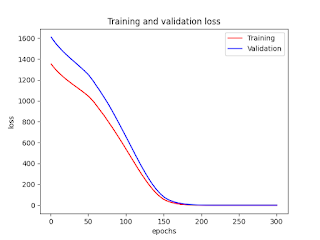
Deep Learning (Regression, Multiple Features/Explanatory Variables, Supervised Learning): Impelementation and Showing Biases and Weights
Deep Learning (Regression, Multiple Features/Explanatory Variables, Supervised Learning): Impelementation and Showing Biases and Weights ...